
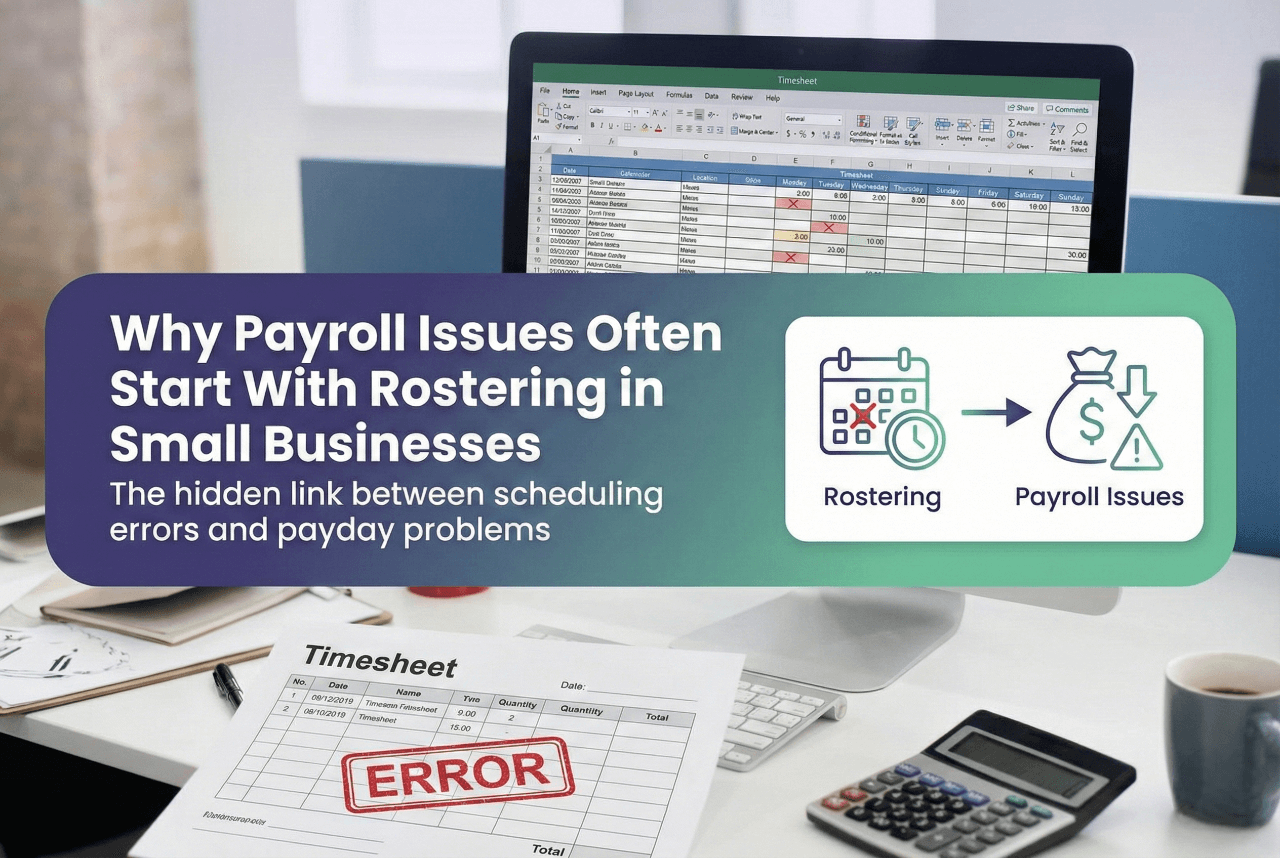
For many small business payroll owners, payroll errors feel like a payroll problem. In reality, they often begin much earlier, at the point where staff hours are planned, recorded, and approved. Rostering decisions shape payroll outcomes long before wages are calculated.
When shifts are unclear, changes are handled informally, or hours are tracked inconsistently, payroll becomes a process of correction rather than confirmation. By the time payday arrives, business owners are already on the back foot, checking timesheets, fixing discrepancies, and responding to employee concerns. This is why payroll management is so critical from the rostering stage.
This blog uncovers the hidden challenges behind rostering and payroll, showing what often causes errors and inefficiencies in small businesses.
Rostering Sets the Foundation for Payroll Accuracy
Rostering determines who works, when they work, and for how long. In industries with rotating shifts, casual staff, or variable hours, this foundation matters even more. Hospitality, retail, healthcare, and construction businesses rely on accurate rosters to manage labour costs and ensure coverage.
When rostering is structured and properly recorded, payroll software for small businesses has reliable data to work with. When it is not, payroll teams are forced to interpret incomplete information. Every missed clock-out, last-minute shift change, or verbal approval creates uncertainty that must be resolved later during payroll processing. Payroll errors are rarely calculation mistakes, they usually result from inconsistent rostering data.
How Manual Rostering Leads to Payroll Errors and Stress
Many small businesses still manage rostering through spreadsheets, messages, or informal agreements. While this approach may feel flexible, it introduces risk. Hours are often confirmed from memory, approvals are not documented, and changes are scattered across emails or chats.
When payroll is prepared, these gaps surface. Business owners must verify hours manually, cross-check messages, and resolve disputes before wages can be finalised. What should be a routine process turns into a time-consuming weekly task. Without proper payroll systems, this becomes a recurring administrative burden.
When Rostering and Payroll Systems Do Not Talk to Each Other
Even businesses that use digital rostering tools can face payroll challenges if those systems do not align with payroll. When approved hours sit in one platform and payroll runs in another, data must be transferred manually before each pay cycle.
This repeated handling increases the likelihood of errors. Small discrepancies can lead to underpayments, overpayments, or compliance risks. Over time, business owners lose confidence in their payroll results and spend more time double-checking figures than necessary. Using integrated payroll software Australia ensures data flows seamlessly between rostering and payroll.
Why Small Businesses Tolerate Inefficient Rostering and Payroll
Despite ongoing issues, many small businesses continue with inefficient rostering and payroll processes. Cost is a common reason. Rostering software often charges per employee, which can become expensive for businesses with casual or seasonal staff.
To avoid rising fees, businesses compromise at the rostering stage, relying on informal shift changes, manual approvals, or disconnected tools. These decisions create payroll issues later. The time spent fixing payroll errors, responding to staff queries, and correcting underpayments often outweighs the savings made on software costs. Investing in a managed payroll service that aligns with rostering can reduce risk and save time in the long term.
Conclusion
Payroll issues rarely begin at payday. They usually start earlier, with how shifts are planned, changed, recorded, and approved. When rostering is unclear or informal, payroll becomes a process of correction rather than confirmation.
Improving rostering practices and ensuring they align with payroll systems can remove many of the problems small businesses face each week. MyPayroll from myaccountant.com.au supports this process by working with existing rostering systems to reduce manual entry, improve accuracy, and streamline payroll processing. Built for Australian businesses, it helps turn payroll into a predictable process rather than a recurring challenge.



.png)

